
"Grade 4 coffee"
5000 article(s) found

The citrus flavor can be called the best Ethiopian coffee in the world.
Even the official research unit of Ethiopia does not know how many Arabica subspecies there are in Ethiopia. The coffee cooperatives in this mountain are certainly different from those planted in another mountain, and even small farmers in the same region grow different varieties of coffee. It has been estimated that there are at least 2000 varieties of Ethiopian coffee and even more than 4500 kinds of coffee. Compared to the southern neighbor Ken

The initial processing technology of coffee in Yunnan requires Arabica to grow coffee beans.
Technical requirements for the initial processing of small seed (Arabica seed) Coffee 1. There are two processing methods for coffee beans made from fresh coffee fruits, namely wet processing and dry processing. The first and second grade fruits are processed by wet method, and the third grade fruits are processed by dry method in areas without peeling machine and lack of water. 2. Processing technology 2.1 equipment and facilities should be equipped with fresh fruit collection pool and siphon

Description of Coffee Flavor in Xidamo Shaqiso, Ethiopia, introduction to the price of grinding degree and baking degree
Even the official research unit of Ethiopia does not know how many Arabica subspecies there are in Ethiopia. The coffee cooperatives in this mountain are certainly different from those planted in another mountain, and even small farmers in the same region grow different varieties of coffee. It has been estimated that there are at least 2000 varieties of Ethiopian coffee and even more than 4500 kinds of coffee. Compared to the southern neighbor

Introduction to the Yega Coffee Cochel Shepherd Coffee Bean Flavor processing Manor in Ethiopia
The grade of Ethiopian coffee: Ethiopian washed coffee Yega Chefe G1 G2 Sidamo (Yirgacheffe, Sidamo) the highest grades are level 2 and 3 (G2, G3), while sun-processed coffee in eastern Ethiopia is mostly Grade 4 or Grade 5 (G4, G5). In many cases

Description of Geographical characteristics and Flavor of Coffee beans in Yegashifi Sidamo area
Description of Geographical characteristics and Flavor of Coffee beans in Yegashifi Cedamo production area the highest grades of Cedamo (Yirgacheffe, Sidamo) are Grade 2 and Grade 3 (G2 and G3), and most of the sun-processed coffees in eastern Ethiopia are Grade 4 or Grade 5 (G4, G5). In many cases, level 4 coffee is marked as level 5 in order to reduce taxes. The current grading is not very unified.
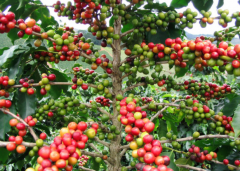
Top Ugandan coffee will have AA grade coffee beans.
Boutique coffee (specialty coffee) is also called specialty coffee selection coffee. It refers to coffee made from a small number of raw beans with excellent taste grown in an ideal geographical environment. Depending on the special soil and climatic conditions in which they grow, they have outstanding flavor. After strict selection and classification, this kind of coffee is hard in texture, rich in taste and stylish.

Description of Flavor of Yejiaxuefei Coffee Manor introduction of Grinding scale in producing area
Yega Chuefei Coffee Manor Flavor description Taste Variety characteristics of production area Grinding scale introduction of Ethiopian washed Coffee Yega Chefe G1 G2 Cedamo (Yirgacheffe, Sidamo) the highest grades are Grade 2 and Grade 3 (G2, G3), and most of the sun-processed coffee in eastern Ethiopia are Grade 4 or Grade 5 (G4, G5). In many cases, level 4 coffee is marked as level 5 in order to

Introduction to the characteristics of Flavor description treatment of Ethiopian Coffee Bean varieties
Ethiopian coffee taste variety Ethiopian coffee should be the only pollution-free green organic coffee in the world. Ethiopia still uses traditional planting methods to artificially care for coffee trees, and fertilizers are mainly deciduous leaves, withered grass and animal manure, replacing harmful pesticides and herbicides used on a large scale in other coffee-producing countries. Ethiopia now produces mocha-Mocha coffee

Introduction to the flavor description and grinding characteristics of Ethiopian coffee varieties in producing areas
Grade of Ethiopian coffee: Ethiopian washed coffee Yega Chuefei G1 G2 Sidamo (Yirgacheffe, Sidamo) has the highest grades 2 and 3 (G2, G3), while sun-processed coffee in eastern Ethiopia is mostly grade 4 or 5 (G4, G5). In many cases, level 4 coffee is marked as level 5 in order to reduce taxes. At present, the classification is not uniform and there are

Grading of raw coffee beans
At present, there are three main rating criteria for raw coffee beans, and different countries adopt different rating methods according to their own production conditions and national conditions (not all coffee producing countries adopt the same method). Let's introduce these three popular rating methods. One: the reason for the emergence of such a classification standard according to the altitude of the coffee producing area is mainly because of the high level.
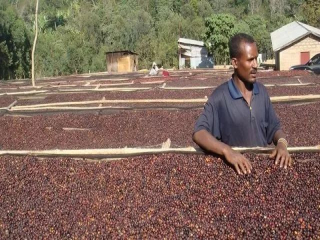
Ethiopian coffee bean grade introduction, why Ethiopian coffee beans are of different sizes?
Why do people usually buy Ethiopian coffee beans of different sizes? Even if it is the highest G1 coffee bean. Today I would like to explain to you why Ethiopian coffee beans are of different sizes. This involves Ethiopian coffee beans, and his grading has nothing to do with the size of coffee beans.

Brief introduction of Grinding scale by description of Taste and Flavor in Coffee Farm area of Ethiopia
Grade of Ethiopian coffee: Ethiopian washed coffee Yega Chuefei G1 G2 Sidamo (Yirgacheffe, Sidamo) has the highest grades 2 and 3 (G2, G3), while sun-processed coffee in eastern Ethiopia is mostly grade 4 or 5 (G4, G5). In many cases, level 4 coffee is marked as level 5 in order to reduce taxes. At present, the classification is not uniform and there are

Latin American coffee beans grade classification style flavor description characteristics planting area
Professional barista exchanges please follow the coffee workshop (Wechat official account cafe_style) Columbia (Colombian) aroma 3.5 minutes brightness 4.5 minutes mellow 3.5 minutes flavor 4.5 minutes aftertaste 4.5 points suitable for roasting degree: Medial/City/Full city/Espresso/Dark/French Columbia beans are one of the few coffee beans that range from shallow roasting to very deep roasting, from light roasting to clean

Ethiopian Hambera Coffee 5.0 Sidama Coffee Flavor Taste Characteristics Introduction
Professional coffee knowledge exchange More coffee bean information Please pay attention to coffee workshop (Weixin Official Accounts cafe_style) Several important Ethiopian coffee producing areas, such as Yejiashev and Sidamo, have received considerable attention in recent years. Guji is also a part of Oromia Asia, southwest Ethiopia, south of Addis Ababa, the capital.
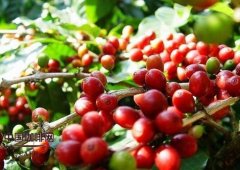
Grade A water washing treatment of pearl beans in PNG Kimmel Manor, Papua New Guinea
Papua New Guinea (Papua New Guinea) aroma 3.5 minutes brightness 3.5 minutes mellow 3.5 minutes flavor 4.5 minutes aftertaste 4 points suitable for baking: City/Full city New Guinea beans can be baked a wide range of soft, balanced flavor from city to a balanced flavor of full city, and even oil re-baking can be done, depending on your preference. New Guinea

Full of soft Yega Xuefei Aduo boutique coffee beans planting geographical location, climate, altitude is simple.
4. The grading system of grade Ethiopian coffee is not based on the number of items, but on the proportion of defective beans in raw beans. In October 2009, Ethiopia launched the ECX boutique coffee trading grading system. Q-Grader rated raw beans as follows: washed Yega Xuefei was divided into Grade 1 and Grade 2, and Solar Yega Xuefei was classified as G

Characteristics of Sidamo Coffee grading system what are the grades of Ethiopian coffee beans G1 and G2
Question1: why are Ethiopian coffee beans always big and small? If you are very fond of African beans, it should be easy to find that Ethiopian beans are generally of different sizes and have significantly lower evenness than those in Kenya. Sometimes roasting appearance can be found in the observation of the same batch of coffee beans, no matter whether it is Yega Xuefei or Sidamo, whether it is washed or insolated.

Graded coffee raw bean treatment
At present, there are three main rating criteria for raw coffee beans, and different countries adopt different rating methods according to their own production conditions and national conditions (not all coffee producing countries adopt the same method). Let's introduce these three popular rating methods. One: the reason for the emergence of such a classification standard according to the altitude of the coffee producing area is mainly because of the high level.

A brief introduction to the description of the flavor and aroma characteristics of the boutique coffee beans full of softness.
The highest grades of Sidamo (Yirgacheffe, Sidamo) are Grade 2 and Grade 3 (G2 and G3), and most of the sun-processed coffees in eastern Ethiopia are Grade 4 or Grade 5 (G4 and G5). In many cases, level 4 coffee is marked as level 5 in order to reduce taxes. At present, the grading is not uniform and messy, because there are primary and secondary sun processing (Grand G).

What is the grading system for Ivorian coffee? What is the variety of coffee grown in C ô te d'Ivoire?
Professional coffee knowledge exchange more coffee bean information please follow the coffee workshop (Wechat official account cafe_style) C ô te d'Ivoire is the world's 83rd largest export economy. In 2016, C ô te d'Ivoire exported US $10.3 billion and imported US $815 million, with a trade surplus of US $211 million. In 2016, the gross domestic product of C ô te d'Ivoire was US $36.4 billion, with a total per capita GDP.